



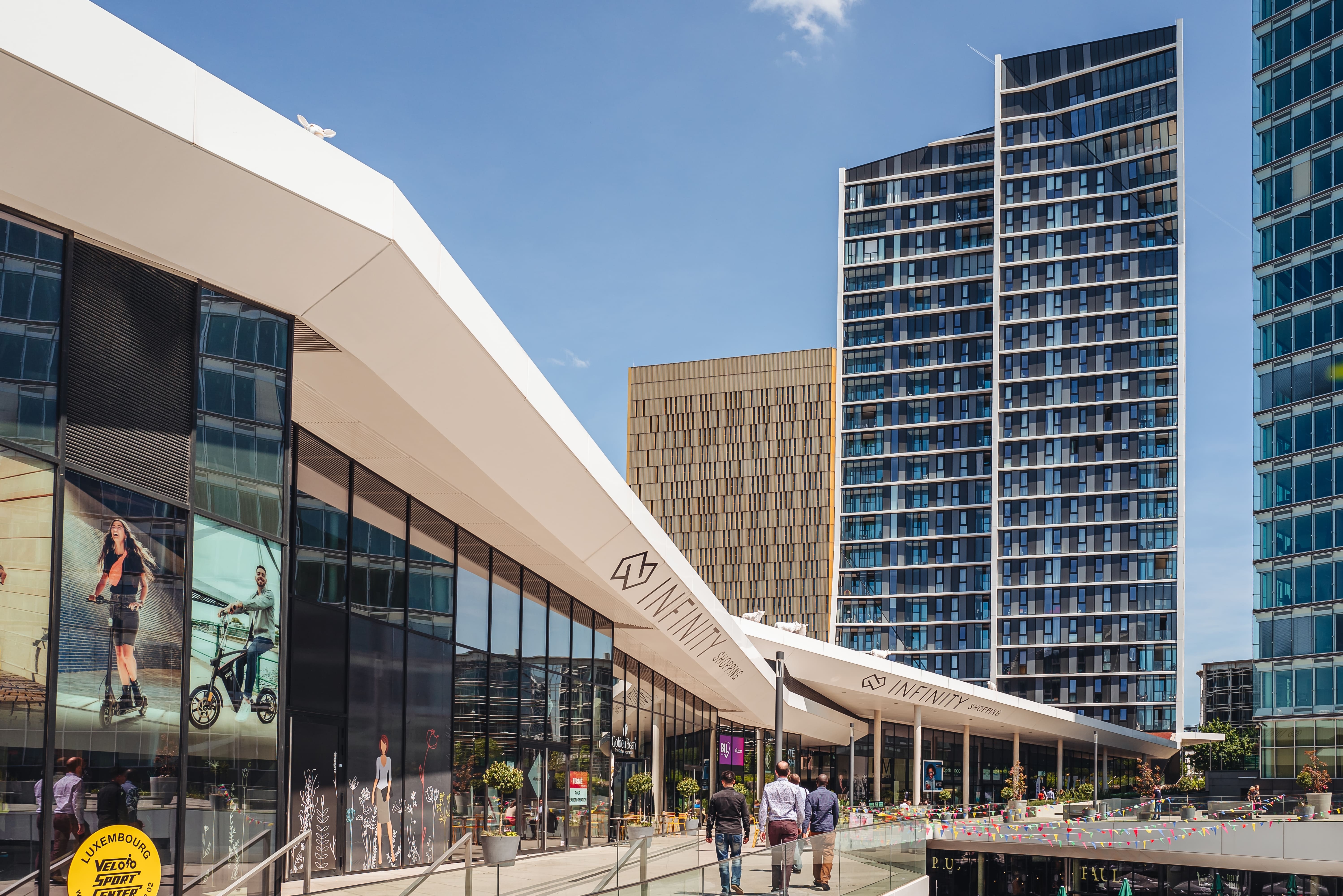


Finding housing in Luxembourg: the most sought-after residential areas for expatriates and cross-border workers

The Luxembourg rental market is under severe pressure, with rents among the highest in the eurozone, particularly in the capital and its immediate surroundings.
The neighbourhoods of Belair, Limpertsberg, and Kirchberg in Luxembourg City, as well as peripheral municipalities such as Bertrange, Strassen, and Hesperange, account for a large share of expatriate demand.
Municipalities in the south of the country such as Esch-sur-Alzette and Bettembourg offer less expensive alternatives with reasonable access to the capital.
Finding housing in Luxembourg is often described by newcomers as one of the most stressful stages of their relocation. The market is not only among the most expensive in Europe, but also under considerable strain - available rental properties go quickly, and candidates sometimes find themselves competing with several dozen other applicants for the same apartment.
Despite a slight price correction that began in 2023, rents remain at high levels that require serious financial preparation and a well-defined search strategy. Understanding the residential geography of Luxembourg and the specificities of each neighbourhood is a prerequisite for directing your search effectively.
Luxembourg City: very different neighbourhoods for a range of budgets
The Luxembourg capital is divided into 24 neighbourhoods with very distinct characters. For expatriates and families settling in, certain neighbourhoods consistently come up in discussions for their quality of life, services, and accessibility. Limpertsberg, a leafy residential neighbourhood within walking distance of the city centre, is very popular with families for its tranquillity, quality schools, and numerous local shops. Apartments and townhouses there are in high demand, and rents are among the highest in the capital.
Belair is another residential neighbourhood highly sought after by expatriates, notably thanks to its location on the western side of the city, close to the European School and the road routes towards Belgium and France. Kirchberg, the plateau on which the European institutions and many banks and international companies are based, attracts young professionals for its modernity and its immediate proximity to workplaces.
New housing has been built there in recent years, but prices reflect the strong demand in this rapidly developing neighbourhood. The Grund and Clausen, historic neighbourhoods nestled in the valleys that run through the city, offer a picturesque setting much appreciated by those who value authenticity, but available properties there are scarce and highly sought after. According to data from the Luxembourg Housing Observatory, the average rent in Luxembourg City stands at around 39 euros per square metre - one of the highest levels in Europe.
Peripheral municipalities: a good compromise between cost and quality of life
Many expatriates and families choose not to live in the capital but in one of the nearby peripheral municipalities, which often offer better value for money and a more spacious living environment.
Bertrange and Strassen, located to the west of Luxembourg City on the road towards the Belgian border, are among the most popular municipalities for families with children. These municipalities offer detached housing with gardens, quick access to the city centre by car or bus, and proximity to the International School of Mamer, which is very popular with expatriate families. Rents there are slightly lower than those in the capital but remain high by European standards.
Hesperange and Sandweiler, municipalities located to the south-east of the capital, are also highly sought after for the quality of their housing, the tranquillity of their surroundings, and their accessibility. Niederanven, to the east of Luxembourg City and close to the airport, is appreciated for its recent housing stock and rural environment, but the absence of a direct public transport link can complicate daily commuting without a car.
For families looking to benefit from more space on a controlled budget, municipalities such as Mersch, Steinsel, or Lorentzweiler, located in the Alzette valley to the north of the capital, represent interesting alternatives with rents noticeably lower than those in the immediate periphery of Luxembourg City. As the expatriate guide published by JustArrived.lu notes, the choice of municipality is often just as important as the choice of housing itself, since it determines access to schools, services, and daily commuting times.
The south of the country: a less expensive alternative for those who accept the distance
For households with tighter budgets, or those who work in the south of Luxembourg - particularly in the industrial and technology zone of Esch-sur-Alzette and Differdange - the former mining basin offers an increasingly attractive residential alternative. Esch-sur-Alzette, the country's second city with around 37,000 inhabitants, has undergone significant urban transformation over the past decade, driven notably by the development of the university campus and the Belval cultural zone - a former steelworks site converted into a mixed-use neighbourhood combining housing, shops, cultural spaces, and innovative businesses.
Rents in Esch-sur-Alzette and the surrounding municipalities such as Mondercange, Sanem, or Bettembourg are significantly lower than those in Luxembourg City, potentially 20 to 35% cheaper for an equivalent property. The railway line connecting Esch-sur-Alzette to Luxembourg City in under 30 minutes, with high frequencies during peak hours, makes daily commuting easier for those who work in the capital. However, the area is less international than the capital and the range of English-language services is more limited, which can be a drawback for some English-speaking expatriates or for families looking for an international school.
Conclusion
Finding the right housing in Luxembourg requires making clear trade-offs between budget, location, size, and access to services. The capital offers the greatest diversity of neighbourhoods and an intense urban lifestyle, but at prices that weigh heavily on the monthly budget. Peripheral municipalities appeal to families for their space and tranquillity, provided they are willing to accept car dependency for some journeys.
The south of the country remains the least expensive area, with an urban renewal dynamic that makes it increasingly attractive. In all cases, starting your search several weeks before the planned moving date is essential in order to have a real choice and avoid being forced to accept housing that does not meet your needs.
FAQ
Is a deposit required to rent an apartment in Luxembourg?
Yes, the vast majority of landlords ask for a rental guarantee equivalent to two or three months' rent, deposited in a blocked account in the tenant's name or in the form of a bank guarantee. This deposit is returned at the end of the lease, minus any damage noted during the exit inspection.
Are estate agents essential for finding housing in Luxembourg?
No, many properties are rented directly between landlords and tenants without going through an agency. Sites such as Athome.lu and Immotop.lu, as well as Facebook groups specialising in rentals in Luxembourg, allow you to contact landlords directly. Agencies are nonetheless useful for highly mobile expatriate profiles who have little time to search.
How long should you expect to spend finding housing in Luxembourg?
In current market conditions, between two and six weeks is a reasonable timeframe for finding housing that meets your criteria, provided you launch your search actively. For certain highly sought-after neighbourhoods or certain types of property (houses with gardens, spacious apartments at reasonable prices), the search can take several months.